Friday, March 31, 2023

gods of ancien gaul

 Among the strictly classical gods, Vulcan, Diana and Hercules were all popular. The god of fire and patron of smiths—the protectress of forests and hunters—the paragon of strength and fortitude—all found a place of honour among the Gauls.

🌐
 Religion of the Ancient Celts - Gods of Gaul
zendonaldson.com› dragon › macculloch › godsofgaul.htm

THE GODS OF GAUL AND THE CONTINENTAL CELTS · The passage in which CĂŠsar sums up the Gaulish pantheon runs: "They worship chiefly the god Mercury; of him there are many symbols, and they regard him as the inventor of all the arts, as the guide of travellers, and as possessing great influence ...

🌐
 How Gaul ‘Barbarians’ Influenced Ancient Roman Religion | Ancient ...
ancient-origins.net› news-history › translation-gallic-faith-roman-pantheon-002438

September 24, 2020 - However, Caesar conquered much of Gaul during his Gallic Wars , so the Roman military often made their home in various Gallic territories—both for the battles, and to keep the Roman power in place following their victories. Because of this, it is believed that the Roman soldiers needed a way to worship their own gods ...

🌐
 The Ancient Paths: Discovering the Lost Map of Celtic Europe - ...
books.google.com.br› books

Graham Robb's The Ancient Paths will change the way you see European civilization.Inspired by a chance discovery, Robb became fascinated with the world of the Celts: their gods, their art, and, most of all, their sophisticated knowledge of science. His investigations gradually revealed something ...

🌐
 The Ancient Celtic Pantheon - World History Encyclopedia
worldhistory.org› article › 1715 › the-ancient-celtic-pantheon

March 19, 2021 - Alisonus (also Alisanos) - a god associated with rocks or rocky outcrops, possibly connected to the oppidum of Alesia in Gaul or the river Alisos. He is mentioned in votive inscriptions on two bronze dishes found in east-central France.

🌐
 Chapter III. The Gods of Gaul and the Continental Celts
sacred-texts.com› neu › celt › rac › rac06.htm

As the Greeks called by the names of their own gods those of Egypt, Persia, and Babylonia, so the Romans identified Greek, Teutonic, and Celtic gods with theirs. The identification was seldom complete, and often extended only to one particular function or attribute. But, as in Gaul, it was often part of a state policy, and there the fusion of cults was intended to break the power of the Druids.

🌐
 The gods of Gaul - Deo Mercurio
deomercurio.be› en › dii.html

Among the strictly classical gods, Vulcan, Diana and Hercules were all popular. The god of fire and patron of smiths—the protectress of forests and hunters—the paragon of strength and fortitude—all found a place of honour among the Gauls.

🌐
 Celtic Tomes - The Gods of Gaul CT038 | Listen via Stitcher for ...
stitcher.com› podcast › celtic-myth-podshow › celtic-tomes › e › 64867860

The Religion of the Ancient Celts (1911) Chapter 3: The Gods of Gaul and the Continental Celts by J. A. MacCulloch A discussion of the innumerable Gods of Gaul and the influence of the Roman gods on the continental deities. Names Used in this Section Apollo Juppiter Minerva Dispater Jupiter ...

🌐
 Names of Offices and Gods, in Britain and Gaul, of Phoenician ...
quod.lib.umich.edu› e › eebo › A61366.0001.001 › 1:5.6.3

Mar, or Maur, as 'tis now pronounced in the British Tongue, signifies GREAT;* From this word, without doubt, many British and Gaulish Names of PRINCES were compounded, as Condomarus, Cwismarus, Combolomarus, Induciomarus, Viride∣marus, Teutomarus; Now Mar of the Phoenician, is a Lord or Prince.

🌐
 Celtic religion - The Celtic gods | Britannica
britannica.com› topic › Celtic-religion › The-Celtic-gods

October 21, 2022 - Mercury was regarded as the inventor of all the arts, the patron of travelers and of merchants, and the most powerful god in matters of commerce and gain. After him the Gauls honoured Apollo, Mars, Jupiter, and Minerva. Of these gods they held almost the same opinions as other peoples did: Apollo drives away diseases, Minerva promotes handicrafts, Jupiter rules the heavens, and Mars controls wars.

🌐
 61 Roman Gaul ideas | roman, celtic gods, roman clothes
pinterest.com› rabbitat › roman-gaul

Jul 22, 2022 - Explore Shaina Rae's board "Roman Gaul" on Pinterest. See more ideas about roman, celtic gods, roman clothes.


🌐
 The Religion of Ancient Gaul and Ccesar Worship (Illustrated).
opensiuc.lib.siu.edu› cgi › viewcontent.cgiPDF

OpenSIUC is an institutional repository offering permanent, reliable, and free access to research and scholarly material produced at Southern Illinois University Carbondale · Top 10 DownloadsAll time Recent Additions50 most recent additionsActivity by year

🌐
 Gaulish pantheon | Galnet Wiki | Fandom
galnet.fandom.com› wiki › Gaulish_pantheon

February 27, 2023 - The following deities found here are ancient Romano-Celtic gods and goddesses, found in Gaul (France, Belgium, the Alps and northern Italy) and another part of Continental Europe (Spain, Switzerland , Austria , etc). Written sources for these deities come from mainly authors in the classical ...

🌐
 Gauls - Wikipedia
en.wikipedia.org› wiki › Gauls

October 17, 2003 - The Gauls seem to have had a father god, who was often a god of the tribe and of the dead (Toutatis probably being one name for him); and a mother goddess who was associated with the land, earth and fertility (Matrona probably being one name for her). The mother goddess could also take the ...

🌐
 15 Ancient Celtic Gods and Goddesses You Should Know About
realmofhistory.com › home › culture

June 24, 2022 - To that end, in this article, we have mainly focused on the ancient Celtic gods and goddesses of Ireland and Gaul, with the former having its distinct mythical narrative preserved in part by medieval Irish literature. So, without further ado, let us take a gander at 15 ancient Celtic gods and ...

🌐
 Celtic Tomes - The Gods of Gaul CT038 on Stitcher
stitcher.com› show › celtic-tomes › episode › the-gods-of-gaul-ct038-64867860

The Religion of the Ancient Celts (1911) Chapter 3: The Gods of Gaul and the Continental Celts by J. A. MacCulloch A discussion of the innumerable Gods of Gaul and the influence of the Roman gods on the continental deities. Names Used in this Section Apollo Juppiter Minerva Dispater Jupiter ...

🌐
 Celtic deities - Wikipedia
en.wikipedia.org› wiki › Celtic_deities

October 9, 2008 - This table shows some of the Celtic and Romano-Celtic gods and goddesses mentioned above, in Romanized form as well as ancient Gaulish, British, or Iberian names as well as those of the Tuatha DĂ© Danann and characters from the Mabinogion. They are arranged so as to suggest some linguistic ...

🌐
 Gallo-Roman religion - Wikipedia
en.wikipedia.org› wiki › Gallo-Roman_religion

October 17, 2005 - In other cases, Roman gods were given Gaulish female partners – for example, Mercury was paired with Rosmerta and Sirona was partnered with Apollo. In at least one case – that of the equine goddess Epona – a native Celtic goddess was also adopted by Romans.

🌐
 Celtic Ruins: Human Sacrifices in Ancient Gaul | Pagan gods, Celtic, ...
pinterest.com › explore › education › subjects

November 25, 2013 - Mar 21, 2014 - The practice of human sacrifices among the ancient Celts in Gaul

🌐
 Mythology in France - Wikipedia
en.wikipedia.org› › wiki › Mythology_in_France

December 24, 2004 - After the sacking of Gaul by the Romans in the 2nd century, the spiritual and mythological practices of the Gauls in the French region began to change due to Roman influence. Traditional Celtic Paganism draws on the deities of the Celtic pantheon, an extensive grouping of gods and goddesses ...

Tuesday, March 28, 2023

All the other texts on napoleonica.org (currently offline): the work of the SĂ©nat, the opposition of the Comte de Lille (future Louis XVIII)…

Liste des fascicules composant le Recueil "sur le gouvernement impérial et héréditaire"
 

Pour consulter le texte du document, cliquer sur la date de la séance (soulignée)

1. Recueil des piÚces et actes relatifs à l'établissement du gouvernement impérial héréditaire ; imprimé par ordre du Sénat, Imprimerie de Pierre Didot l'aßné, 1804, 132 p.
Séance du 6 germinal an XII,
Séance du 6 floréal an XII,
Séance du 14 floréal an XII,
Séance du 26 floréal an XII,
Séance du 28 floréal an XII,
Séance du 30 floréal an XII,

2. François de Neufchateau, Nicolas-Louis, Discours prononcĂ© par son excellence M. François de Neufchateau, prĂ©sident du SĂ©nat conservateur, le dimanche 7 prairial an XII, Ă  l'occasion du serment prĂȘtĂ© le mĂȘme jour Ă  sa majestĂ© l'Empereur par les membre du SĂ©nat. imprimĂ© par ordre du SĂ©nat pour faire suite au recueil des piĂšces et actes relatifs Ă  l'Ă©tablissement du Gouvernement impĂ©rial hĂ©rĂ©ditaire, 1804, 19 p.
Séance du 7 prairial an XII

3. Jaubert, François, Opinion de Jaubert, de la Gironde, sur la motion relative au gouvernement héréditaire, Imprimerie Nationale, 1804, 8 p. p.
Séance extraordinaire du 10 floréal an XII

4. Duvidal, Jean Jacques Marie Philippe, Discours prononcé par le C. Duvidal, membre du Tribunat, sur la motion relative au gouvernement héréditaire, Imprimerie Nationale, 1804, 7 p.
Séance extraordinaire du 10 floréal an XII

5. Gillet, Jean Claude Michel, Opinion du citoyen Gillet (de Seine et Oise), sur une motion d'ordre tendante à rendre le gouvernement français héréditaire dans la famille du Premier Consul, Napoléon Bonaparte, Imprimerie Nationale, 1804, 4 p.
Séance extraordinaire du 10 floréal an XII

 [Retour haut de page]

6. Siméon, Joseph JérÎme, Discours prononcé par Siméon, sur la motion d'ordre relative au gouvernement héréditaire, Imprimerie Nationale, 1804, 11 p.
Séance extraordinaire du 10 floréal an XII

7. Curée, Jean François, Motion d'ordre du tribun Curée, sur l'émission d'un voeu tendante à ce que Napoléon Bonaparte, actuellement premier Consul, soit déclaré empereur des Français, et à ce que la dignité impériale soit déclarée héréditaire dans sa famille, Imprimerie Nationale, 1804, 10 p.
Séance extraordinaire du 10 floréal an XII

8. Villot de Fréville, Jean Baptiste Maximilien, Discours prononcé par Fréville, sur la motion relative au gouvernement héréditaire, Imprimerie Nationale, 1804, 14 p.
Séance extraordinaire du 10 floréal an XII

9. Duveyrier, Honoré Marie Nicolas, Discours prononcé par Duveyrier, sur la motion d'ordre relative au gouvernement héréditaire, Imprimerie Nationale, 1804, 6 p.
Séance extraordinaire du 10 floréal an XII

10. Costaz, Louis, Discours prononcé par Costaz, sur la motion d'ordre relative au gouvernement héréditaire, Imprimerie Nationale, 1804, 14 p.
Séance extraordinaire du 10 floréal an XII

11. Carnot, Lazare Nicolas Marguerite, Discours prononcé par le citoyen Carnot, sur la motion d'ordre relative au gouvernement héréditaire, Imprimerie Nationale, 1804, 10 p.
Séance extraordinaire du 11 floréal an XII

12. Lahary, Jacques Thomas, Opinion de Lahary (de la Gironde), sur la motion d'ordre tendante à ce que la dignité impériale soit conférée au Premier Consul Napoléon Bonaparte, et soit déclarée héréditaire dans sa famille en réponse à l'opinion contraire de son collÚgue Carnot, Imprimerie Nationale, 1804, 46 p.
[Séance extraordinaire du 11 floréal an XII]

13. Carrion-Nisas, Marie Henri François Elisabeth, Réplique improvisée de Carrion-Nisas au discours de Carnot, sur la motion d'ordre relative au gouvernement héréditaire, Imprimerie Nationale, 1804, 11 p.
Séance extraordinaire du 11 floréal an XII

14. Carrion-Nisas, Marie Henri François Elisabeth, Discours prononcé par Carrion-Nisas, sur la motion relative au gouvernement héréditaire, Imprimerie Nationale, 1804, 24 p.
Séance extraordinaire du 11 floréal an XII

15. Périn d'Augny, Claude François, Discours prononcé par Périn (de la Moselle), sur la motion relative au gouvernement héréditaire, Imprimerie Nationale, 1804, 11 p.
Séance extraordinaire du 11 floréal an XII

 [Retour haut de page]

16. Grenier, Jean, Opinion de Grenier, sur l'Ă©mission du vƓu relatif Ă  l'hĂ©rĂ©ditĂ© de la magistrature suprĂȘme de la RĂ©publique française, Imprimerie Nationale, 1804, 6 p.
Séance extraordinaire du 11 floréal an XII

17. Savoye-Rollin, Jacques Fortunat, Opinion de Savoye Rollin, sur la motion d'ordre relative à l'hérédité du pouvoir exécutif, et au titre d'empereur à conférer au Premier Consul Bonaparte, Imprimerie Nationale, 1804, 2 p.
Séance extraordinaire du 11 floréal an XII

18. Chabaud-Latour, Antoine Georges François, Opinion de Chabaud-Latour, sur la motion d'ordre relative au voeu national, Imprimerie Nationale, 1804, 6 p.
Séance extraordinaire du 11 floréal an XII

19. Albisson, Jean, Discours prononcé par le citoyen Albisson, sur la motion relative au gouvernement héréditaire, Imprimerie Nationale, 1804, 7 p.
Séance extraordinaire du 11 floréal an XII

20. Challan, Antoine Didier Jean Baptiste, Discours prononcé par Challan, sur la motion relative au gouvernement héréditaire, Imprimerie Nationale, 1804, 6 p.
Séance extraordinaire du 11 floréal an XII

21. Chabot, Georges Antoine, Réponse faite par Chabot (de l'Allier), à un passage de l'Opinion du citoyen Carnot, sur la motion d'ordre relative au gouvernement héréditaire, Imprimerie Nationale, 1804, 3 p.
Séance extraordinaire du 11 floréal an XII

22. Arnould, Ambroise Marie, Discours prononcé par Arnould, membre du Tribunat, sur le voeu à émettre pour l'hérédité du pouvoir exécutif en France dans la famille du premier Consul Bonaparte, Imprimerie Nationale, 1804, 8 p.
Séance extraordinaire du 11 floréal an XII

 [Retour haut de page]

23. Koch, Christophe Guillaume, Opinion du citoyen Koch, tribun, sur le gouvernement héréditaire, Imprimerie Nationale, 1804, 3 p.
Séance extraordinaire du 11 floréal an XII

24. Perret-Duhamel, Pierre Nicolas Jean, Opinion de Perrée sur la motion relative au gouvernement héréditaire, Imprimerie Nationale, 1804, 4 p.
[Séance extraordinaire du 11 floréal an XII]

25. Favard de Langlade, Guillaume Jean, Discours prononcé par Favard sur la motion d'ordre relative au gouvernement héréditaire, Imprimerie Nationale, 1804, 6 p.
Séance [extraordinaire] du 11 floréal an XII

26. Delaistre, Guillaume Joseph Norbert, Opinion de Delaistre, sur la motion d'ordre du citoyen Curée, relative au gouvernement héréditaire, Imprimerie Nationale, 1804, 11 p.
Séance extraordinaire du 11 floréal an XII

27. Carret, Michel, Opinion de Carret (du RhÎne), sur la motion d'ordre relative au gouvernement héréditaire, Imprimerie Nationale, 1804, 7 p.
Séance extraordinaire du 11 floréal an XII

28. Faure, Louis Joseph, Discours du citoyen Faure, sur la motion relative au gouvernement héréditaire, Imprimerie Nationale, 1804, 11 p.
Séance extraordinaire du 11 floréal an XII

29. Delpierre, Antoine François, Opinion de Delpierre, sur la motion d'ordre du citoyen Curée, à la séance du 10, Imprimerie Nationale, 1804, 10 p.
Séance extraordinaire du 12 floréal an XII

30. Chassiron, Pierre Charles Martin, Discours prononcé par le citoyen Chassiron, membre du Tribunat, sur la motion d'ordre relative à l'hérédité du pouvoir exécutif, et au titre d'empereur à conférer au Premier Consul Bonaparte, Imprimerie Nationale, 1804, 10 p.
Séance extraordinaire du 12 floréal an XII

31. Sahuc, Louis Michel Antoine, Opinion du tribun Sahuc, sur une motion d'ordre tendante à rendre le gouvernement français héréditaire dans la famille du Premier Consul Napoléon Bonaparte, Imprimerie Nationale, 1804, 3 p.
Séance extraordinaire du 13 floréal an XII

 [Retour haut de page]

32. Jard-Panvillier, Louis Alexandre, Rapport fait par Jard-Panvillier, au nom de la commission chargée d'examiner la motion d'ordre du Tribun Curée ; sur l'émission d'un voeu tendant à ce que Napoléon Bonaparte, actuellement Premier Consul de la République, soit déclaré Empereur des Français, et à ce que la dignité impériale soit héréditaire dans sa famille, Imprimerie Nationale, 1804, 22 p.
Séance extraordinaire du 13 floréal an XII

33. Leroy, Leroy (de l'Orne), au Tribunat, Imprimerie Nationale, 1804, 4 p.
Séance extraordinaire du 13 floréal an XII

34. Gallois, Jean Antoine Gauvin, Discours prononcĂ© par le C. Gallois, sur le projet d'arrĂȘtĂ© tendant Ă  dĂ©clarer NapolĂ©on Bonaparte Empereur des Français, et Ă  ce que la dignitĂ© impĂ©riale soit hĂ©rĂ©ditaire dans sa famille, Imprimerie Nationale, 1804, 6 p.
Séance extraordinaire du 14 floréal an XII

35. Labrouste, François Marie Alexandre, Opinion de Labrouste (de la Gironde), sur les mesures proposées pour stabiliser les institutions sociales en France, Imprimerie Nationale, 1804, 6 p.
[Séance extraordinaire du 14 floréal an XII]

36. Jard-Panvillier, Louis Alexandre, Discours prononcé par Jard-Panvillier, l'un des Orateurs chargés de porter au Sénat le voeu du Tribunat pour la proclamation de Napoléon Bonaparte à la dignité d'Empereur des Français, à la déclaration de l'hérédité de cette dignité dans sa famille, Imprimerie Nationale, 1804, 10 p.
Séance extraordinaire du 15 floréal an XII

 [Retour haut de page]


Consulat à vie (Floréal an X)

37. Ségur, Louis Philippe, Discours prononcé par Ségur, dans la séance du 22 Floréal, Imprimerie Nationale, 1804, 3 p.
Séance extraordinaire du 22 floréal an X

38. Vaublanc, Vincent Marie Viénot de, Discours prononcé par Viennot-Vaublanc, orateur de la députation envoyée par le Corps législatif, prÚs le gouvernement, le 24 Floréal an X, Imprimerie Nationale, 1804, 3 p.
Séance extraordinaire du 22 floréal an X

39. Chabot, Georges Antoine, Discours prononcé par Chabot de l'Allier, orateur de la députation chargée de présenter au gouvernement les votes individuels des membres du Tribunat sur la question proposée au peuple français. 24 Floréal an X, Imprimerie Nationale, 1804, 4 p.
Séance extraordinaire du 24 floréal an X

40. Marcorelle, Jean François Joseph, Discours prononcé par le citoyen Marcorelle, orateur des membres du Corps Législatif le 27 Thermidor an X, Imprimerie Nationale, 1804, 4 p.
Séance extraordinaire du 27 Thermidor an X

41. Napoléon Bonaparte, Sénatus-consulte organique du premier Consul Bonaparte, Imprimerie Nationale, 1804, 6 p.
Séance du 28 frimaire an XII

42. Tribunat, Extrait du procÚs-verbal des séances du Tribunat. Du lundi 20 Floréal an X de la République Française, Imprimerie Nationale, 1804, 6 p.
Séance du 20 Floréal an X

43. Corps Législatif, Extrait du procÚs-verbal des séances du Corps législatif. Du 20 Floréal an X, Imprimerie Nationale, 1804, 6 p.
Séance du 20 Floréal an X

44. Tribunat, Extrait du procÚs-verbal des séances du Tribunat. Du 21 Floréal an X, Imprimerie Nationale, 1804, 7 p.
Séance du 21 Floréal an X

45. Comte de Lille, "Protestation du comte de Lille", 1804, dans Journal des Débats du lundi 2 juillet 1804
Protestation en date du 6 juin 1804

46. "Réponse à la protestation du comte de Lille", 1804, dans Journal des Débats du vendredi 6 juillet 1804
Réponse en date du 7 juin 1804

47. Sifrein, Jean (Cardinal Maury, Ă©vĂȘque de Monte-Fiascone), "Lettre de fĂ©licitation adressĂ©e Ă  NapolĂ©on Bonaparte en date du 12 aoĂ»t 1804", dans Journal des DĂ©bats du 28 septembre 1804
Lettre en date du 12 août 1804


Monday, March 27, 2023

stonehenge via khan academy

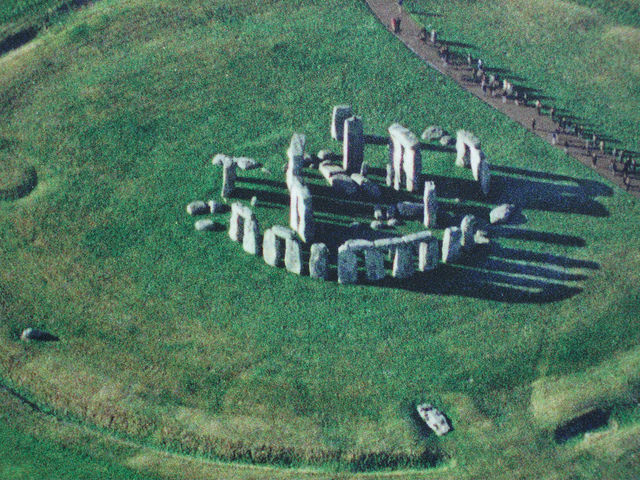
 Recognized worldwide, Stonehenge seems an impossible task: how, and why, did prehistoric people build it?

Stonehenge, Salisbury Plain, Wiltshire, England, c. 2550–1600 B.C.E., circle 97 feet in diameter, trilithons: 24 feet high (photo: Maedin Tureaud, CC BY-SA 3.0)
Stonehenge, Salisbury Plain, Wiltshire, England, c. 2550–1600 B.C.E., circle 97 feet in diameter, trilithons: 24 feet high (photo: Maedin Tureaud, CC BY-SA 3.0)
Stonehenge, on Salisbury plain in England, is one of the most recognizable monuments of the Neolithic world and one of the most popular, with over one million visitors a year. People come to see Stonehenge because it is so impossibly big and so impossibly old; some are searching for a connection with a prehistoric past; some come to witness the workings of a massive astrological observatory. The people living in the fourth millennium B.C.E. who began work on Stonehenge were contemporary with the first dynasties of Ancient Egypt, and their efforts predate the building of the Pyramids. What they created has endured millennia and still intrigues us today.
Aerial view, 2014, Stonehenge, Salisbury Plain, Wiltshire, England, c. 2550–1600 B.C.E., circle 97 feet in diameter, trilithons: 24 feet high (photo: timeyres, CC BY-SA 2.0)
Aerial view, 2014, Stonehenge, Salisbury Plain, Wiltshire, England, c. 2550–1600 B.C.E., circle 97 feet in diameter, trilithons: 24 feet high (photo: timeyres, CC BY-SA 2.0)